
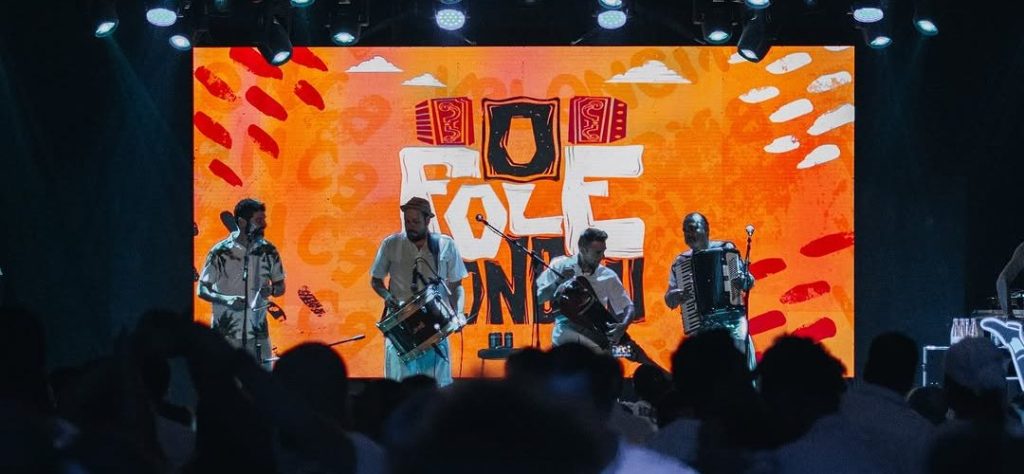
For me, as a Brazilian, Forró was always there—in the background. During my childhood, my mom used to listen to forró eletrônico—like, a lot. I grew up with Mastruz com Leite and Magníficos filling our small apartment. As a kid growing up on the outskirts of São Paulo, it was just another rhythm. I must confess, it was never my favorite; I was way more into pagode and rap. Then, during my teenage years, I became a sad emo girl while Forró Universitário was exploding. I saw it happening but never participated.
Before moving to Germany, I had danced Forró only twice: once as a kid, around 10 years old, at a *risca-faca on the beach, and then as an adult during a girls’ trip, where a friend taught me the basics. All this introduction is to justify my shock when I discovered how big Forró is here in Europe. A result of my own ignorance about Forró’s history and cultural relevance until today, I admit that it’s probably related to my Southeast arrogance that doesn’t consider much the cultural scene above Rio de Janeiro. When thinking about what Brazilian music and dance are promoted outside of Brazil, I would straight-up think about samba or carioca funk. Never Forró.
But despite my shallow assumption, Forró’s infectious rhythms, lively dance, and emotional lyrics have captivated audiences worldwide, and its adaptability has allowed it to blend with other musical styles, creating fusion genres that appeal to global audiences.
Forró in Europe
It’s not easy to find documentation on the beginnings of Forró in Europe. My intention is to find more information about the history of Forró in Europe and share it with you. So far, what’s known is that it started at the beginning of the 2000s, in many countries in parallel. The Brazilian migration during that decade—while the economy began to stabilize under President Lula da Silva (2003–2010)—still saw many Brazilians seeking better opportunities abroad.
The economic crisis in Europe (e.g., the 2008 global financial crisis) affected some countries more than others. For example, Southern Europe (Spain, Portugal, Italy) was hit harder, while Northern Europe (Germany, Netherlands) remained relatively stable and attractive for migrants. Political programs such
as Ciência Sem Fronteiras* in 2011 allowed people the opportunity to study in international universities. Many Brazilians moved to Portugal for work, study, or family reunification. Other European countries with significant Brazilian communities, such as Spain and Italy, also attracted migrants due to shared Latin cultural roots. Ireland also became an option due to its work-study opportunities and now has a strong Brazilian community as well.
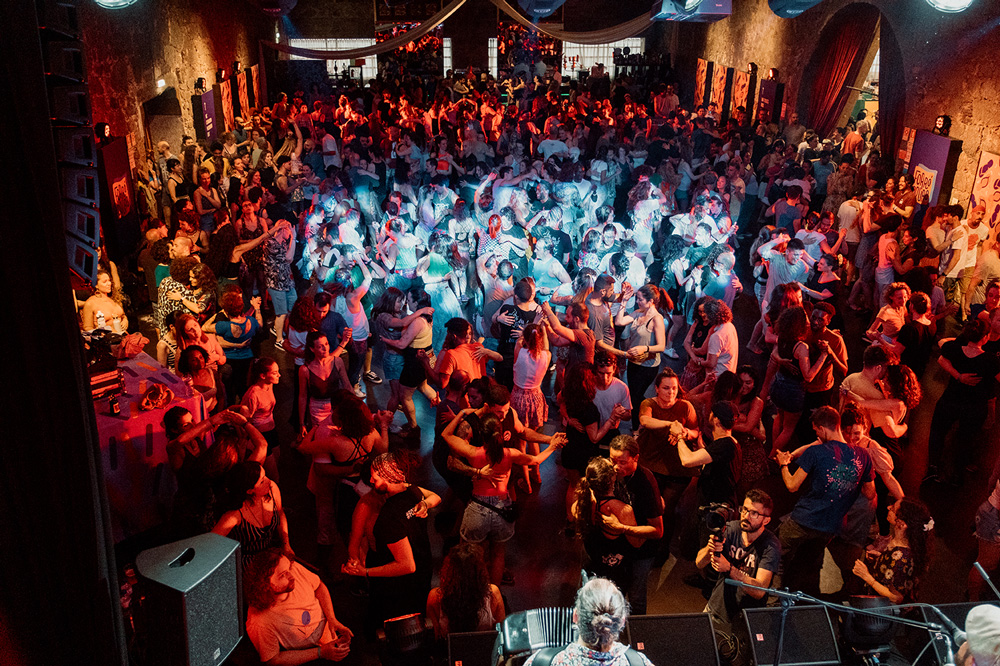
This influx of Brazilians into Europe also brought their culture along, and that included Forró. What boosted Forró’s popularity in the early 2000s was Forró Universitário, which also helped popularize other types of Forró.
Bands started to be invited to play here, and afterward, the need to learn the dance created a demand for teachers. Initially, these teachers weren’t professionals like they are today but rather people—usually men—who knew some basic steps and taught not only out of passion for Forró but also for other interests, if you know what I mean.
Over time, things developed, and the scene has become much more professionalized in terms of teaching, festival organization, and bringing bands and artists from Brazil. Portugal, as a former colonial power with cultural ties to Brazil, has embraced Forró, with regular dance events and festivals. In Lisbon, you can find Forró every day—another sign that we’re taking over the country—and it hosts one of the biggest Forró festivals in Europe, Forró Douro. In Paris and London, there’s a vibrant Forró scene, with dance schools, workshops, and monthly Forró parties.
Germany and the Netherlands have active Forró communities, hosting festivals like Miudinho and Tomé Forró in Berlin, as well as festivals in Munich, Cologne, and Frankfurt, and Bora Forró in Amsterdam. Germany is the country with the most Forró communities in Europe.

Forró in North America, Asia and Oceania
In North America, cities like New York, San Francisco, and Los Angeles have thriving Forró scenes, with dance classes, live music events, and festivals such as Forró NYC. In Canada, Toronto and Montreal have growing Forró communities, often led by Brazilian expats and dance enthusiasts.
Surprisingly, Japan has a passionate Forró community, with dance groups and events in cities like Tokyo and Osaka. In Australia, cities like Sydney and Melbourne have started to embrace Forró, with dance workshops and cultural events.
Forró is all around the world and growing. And there’s much more to that—challenges, the needs of these communities, and opportunities. I’ll be back soon to reflect more on these points.
*Risca Faca: It refers to a bar or dance where confusion and fights always happen.
*Ciência sem Fronteiras (Science without Borders) program was an ambitious initiative launched by the Brazilian government in 2011. Its primary goal was to promote scientific and technological development in Brazil by sending students, researchers, and professionals abroad for training and education in STEM fields (Science, Technology, Engineering, and Mathematics), as well as creative industries and renewable energy.
 Forró Events